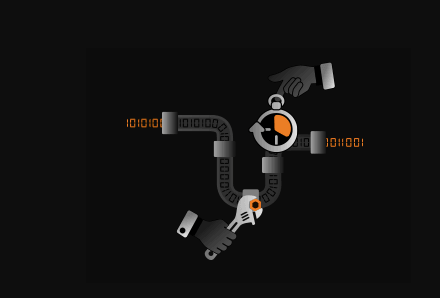

Blockchain distributes validation across many nodes, enabling parallel processing and faster consensus. Smart contracts automate verification and enforcement, reducing manual review time. Layer-2 and cross-chain finality offload work from main chains, batching transactions and settling periodically. Efficient block creation and rapid propagation minimize latency and stale states. Auditable, immutable records support compliant decisions and interoperability. The result is streamlined workflows across sectors, but tradeoffs and implementation choices merit careful consideration as systems scale.
What Makes Blockchain Speed Up Transactions
Blockchain accelerates transactions by eliminating centralized bottlenecks and enabling parallel validation across distributed nodes. The mechanism reduces latency and increases throughput through decentralized consensus, synchronized ledgers, and standardized propagation. Nodes independently verify, then commit blocks, enabling near-real-time settlement.
Workflow prioritizes efficient block creation, packet propagation, and fork resolution, driving latency reduction and throughput optimization while preserving transparency and auditable integrity. Freedom-friendly design supports scalable, autonomous operation.
Smart Contracts and Automated Verification
Smart contracts automate enforcement and verification of agreed-upon terms by encoding logic into programmable, self-executing rules. They define deterministic workflows, trigger events upon condition satisfaction, and log immutable results for auditability. Automated verification reduces manual reviews and accelerates decision points.
Focused on interoperability, token bridging enables cross-domain actions, yet slow validation remains a latency creature to monitor and optimize.
Layer-2 Solutions and Cross-Chain Finality
Layer-2 solutions improve throughput by processing transactions off the main chain while preserving security through periodic settlement. The approach emphasizes cross-chain finality mechanisms, enabling coordinated state proofs and dispute resolution.
Operators implement latency optimization strategies and batching, while validators monitor cross-chain proofs. This architecture targets throughput scalability, reducing end-to-end confirmation times without compromising trust assumptions or asset finality across ecosystems.
Real-World Impact: Faster Settlements Across Industries
Faster settlement capabilities enabled by off-chain processing and cross-chain finality have begun to reshape transaction workflows across sectors. Real-world deployments demonstrate accelerated clearing, reduced reconciliation steps, and streamlined dispute resolution.
Privacy implications emerge as data minimization and selective sharing practices evolve. Regulatory alignment progresses through standardized audit trails, interoperable compliance frameworks, and transparent reporting, empowering institutions while safeguarding participant rights and market integrity.
Frequently Asked Questions
How Does Blockchain Affect Energy Consumption for Speed Improvements?
The query indicates block energy consumption impacts speed efficiency. Block energy use influences throughput, with optimization reducing idle power and accelerating validation. In free-flow workflows, energy-efficient consensus and hardware choices parallelize processing, enhancing speed without prohibitive consumption.
Can Blockchain Speed Gains Apply to Non-Financial Industries?
A shimmering lattice spreads across the workflow, depicting potential. Blockchain adoption enables speed optimization beyond finance, applying to supply chains and data sharing; processes gain parallelism, traceability, and reduced bottlenecks, empowering teams with faster, transparent operations.
What Are Latency Trade-Offs With High Throughput Networks?
Latency vs throughput are trade-offs in high-throughput networks; consensus bottlenecks can constrain latency, while aggressive batching or parallelization may mitigate delays. The workflow emphasizes monitoring, tuning, and modularity to balance performance with freedom and resilience.
Do Consumer Devices Influence Blockchain Processing Times?
Investigating the theory, it is true that consumer devices influence blockchain processing times. Latency awareness and device heterogeneity impact propagation, verification, and mining efficiency, shaping workflow throughput while enabling freedom-aware deployments across heterogeneous edge and mobile environments.
See also: How Blockchain Ensures Security and Transparency
How Do Regulatory Requirements Impact Transaction Finality Speed?
Regulatory constraints can slow finality speed, as compliance checks and cross-border verification introduce sequential steps. The workflow adapts by prioritizing deterministic finality paths and audit-friendly checkpoints, preserving freedom while ensuring verifiable, compliant transaction outcomes.
Conclusion
Blockchain accelerates transactions through parallel validation, automated smart contracts, and scalable layer-2 and cross-chain finality. By decentralizing processing, it reduces bottlenecks, while automated enforcement minimizes manual review and speeds decision points. Layer-2 batching and periodic settlement relieve main-chain load, enabling faster settlements across industries. In practice, this mirrors a high-frequency orchestra tuning mid-performance, an anachronistic steam whistle signaling efficiency gains—tech-forward cadence aligning with regulatory-aligned audit trails to sustain trust and interoperability.


 By
By